
Higher education in the United States is undergoing rapid transformation. From technological innovation to evolving student expectations, colleges and universities are facing both unprecedented challenges and exciting opportunities. Here’s a look at the most important emerging trends shaping U.S. higher education in 2025 and beyond.
Artificial Intelligence in Education
Artificial Intelligence (AI) is no longer a distant concept—it’s here. Institutions are integrating AI tools into teaching, administrative workflows, and student services. AI-driven chatbots assist students with enrollment questions, predictive analytics help advisors identify at-risk learners, and generative AI supports curriculum design. Moreover, there is a growing push to teach AI literacy, ensuring that graduates understand and can responsibly use AI tools in the workplace. Ethical concerns such as data privacy and academic integrity remain a priority.
Flexible and Hybrid Learning Models
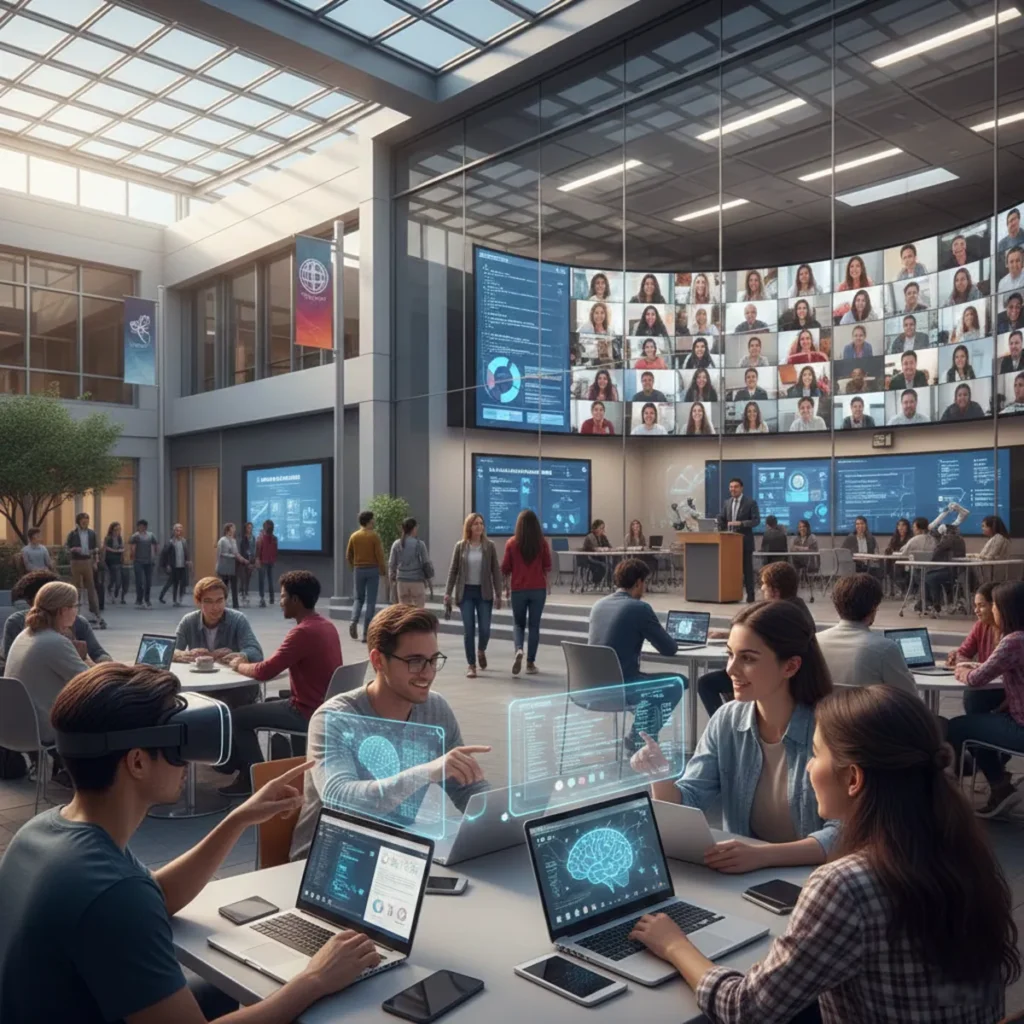
The pandemic accelerated online learning, but the trend toward hybrid and multi-modal education continues. Colleges are adopting HyFlex models that combine in-person and online classes, allowing students to choose the format that suits them best. Digital platforms, VR/AR technology, and interactive learning tools are helping institutions deliver more personalized education, while physical spaces are being redesigned to support collaboration and hybrid learning.
Microcredentials and Competency-Based Education
Traditional four-year degrees are no longer the only pathway to career success. Colleges are increasingly offering microcredentials, certificates, and stackable credentials tied to specific skills. Competency-based education (CBE), which allows students to progress upon mastering skills rather than completing credit hours, is growing in popularity. These shorter, targeted programs help students enter the workforce faster and meet the evolving demands of employers.
Access, Affordability, and Non-Traditional Learners
Financial pressures remain a major concern for students and institutions alike. Rising tuition costs, coupled with economic uncertainty, are pushing colleges to explore alternative financing models such as Income Share Agreements (ISAs). At the same time, institutions are focusing on non-traditional learners, including working adults, transfer students, and “some college, no degree” populations. Expanding outreach and providing tailored support for these groups is becoming essential for maintaining enrollment and equity.
Institutional Restructuring and “Systemness”
Many universities are consolidating resources or creating stronger networks across campuses—a concept often called “systemness.” This approach improves operational efficiency, fosters collaboration, and helps institutions remain financially sustainable. Leadership challenges are also prominent, with high turnover and succession planning becoming critical issues for institutional stability.
Student Well-Being and Mental Health
The mental health of students has become a top priority. Colleges are investing in counseling services, wellness programs, and supportive learning environments to reduce stress and improve retention. Additionally, assessment practices are evolving to be more formative and low-stakes, promoting learning rather than high-pressure testing.
Cybersecurity and Data Protection
As campuses become more digitally connected, cybersecurity risks are increasing. Protecting sensitive student and institutional data is critical. Institutions are investing in robust security systems and training staff and students in best practices for online safety.
Academic-Industry Alignment
To meet workforce demands, universities are revising curricula and forming partnerships with industry. Programs are increasingly applied, interdisciplinary, and experiential, ensuring graduates are equipped with the skills employers need. This alignment helps colleges demonstrate value while preparing students for careers in emerging fields like AI, data analytics, and renewable energy.
Globalization and Cross-Border Education
Colleges are expanding their reach internationally through online programs, partnerships, and satellite campuses. A global perspective in education not only attracts diverse students but also prepares learners to thrive in a connected, multicultural world.
Emerging Fields and Interdisciplinary Programs
New disciplines are gaining prominence. For example, Quantum Information Science & Engineering (QISE), environmental sciences, and AI-related fields are shaping the curriculum of tomorrow. Interdisciplinary programs allow students to tackle complex, real-world problems by combining multiple fields of study.
Conclusion: Preparing for the Future
The landscape of U.S. higher education is evolving rapidly. Institutions must balance innovation with equity, integrating technology responsibly while maintaining accessibility. Flexible learning, AI integration, new credential pathways, and mental health support are no longer optional—they are essential for success. By embracing these trends, colleges and universities can prepare students for a rapidly changing world and maintain their relevance in the 21st century.