
If you are searching for the best credit cards in the USA, you are likely trying to make a smart and responsible decision. Credit cards are powerful financial tools, but only when they are understood clearly. Too many guides focus on promotions and benefits while hiding costs, interest, and limitations.
This guide is written with one promise: When you finish reading, you should feel clear, confident, and informed, not confused or misled.
How credit card interest and charges really work
Before choosing any credit card, it is essential to understand how interest and fees work, because this is where most people lose money.
Interest on credit cards is shown as APR (Annual Percentage Rate). APR applies only if you do not pay your full balance.
Typical U.S. credit card APR ranges in 2026 are:
- Excellent credit: approximately 20%–24%
- Good / average credit: approximately 22%–27%
- Fair or rebuilding credit: approximately 27%–30% or higher
If you pay your full balance every month, you pay zero interest, regardless of the APR. If you carry a balance, interest compounds and can quickly erase rewards.
Common charges you should always check:
- Annual fee: Yearly cost for holding the card
- Foreign transaction fee: Usually 3%, though some cards charge less or none
- Late payment fee: Charged if you miss the due date
APR and fees are variable and typically tied to the U.S. Prime Rate.
Chase Sapphire Preferred – Best balanced travel credit card for most Americans
This card is well suited for people who travel occasionally and want flexible rewards without premium-level annual fees.
Why this card works
- Rewards on travel and dining
- Flexible points usable for flights or hotels
- Useful travel protection benefits
Charges and interest
- Annual fee: About $95
- APR range: Typically 22%–27% (variable)
- Foreign transaction fee: None
Best for
- People who travel one to three times a year
- Users who pay balances in full
Not ideal for
- People who never travel
- Anyone who regularly carries balances
Chase Sapphire Reserve – Best for frequent travelers
This card is designed for people who travel often and value comfort, insurance, and convenience.
Why people choose it
- Airport lounge access
- Annual travel credits
- Strong travel insurance coverage
Charges and interest
- Annual fee: About $550
- APR range: Typically 22%–27% (variable)
- Foreign transaction fee: None
Best for
- Frequent domestic or international travelers
- People who actively use travel credits and lounges
Not ideal for
- Infrequent travelers
- Users uncomfortable with high annual fees
American Express Gold Card – Best for dining and grocery spending
This card is built for everyday life, especially for people whose largest expenses are food and groceries. The annual fee increased, but so did the food-related credits.
Why this card works well
- Strong rewards on dining and groceries
- Designed for everyday spending, not luxury travel
- Food credits that can offset much of the annual fee
Charges and interest
- Annual fee: $325
- APR range: Typically 21%–29% (variable)
- Foreign transaction fee: None
Credits that help justify the fee
- Monthly dining credits with select restaurant partners
- Monthly credits for select food and beverage merchants
Best for
- Households with high dining and grocery spending
- People who will consistently use the food credits
Not ideal for
- Users who want a low-fee or no-fee card
- Anyone who will forget to use monthly credits
American Express Platinum Card – Best for luxury travel
This card is designed for premium travel experiences and benefits, not simplicity.
Why people use it
- Airport lounge access
- Hotel and airline benefits
- Premium customer service
Charges and interest
- Annual fee: About $695
- APR range: Typically 21%–29% (variable)
- Foreign transaction fee: None
Best for
- Frequent travelers who use premium perks
Not ideal for
- People who prefer simplicity
- Anyone who carries balances
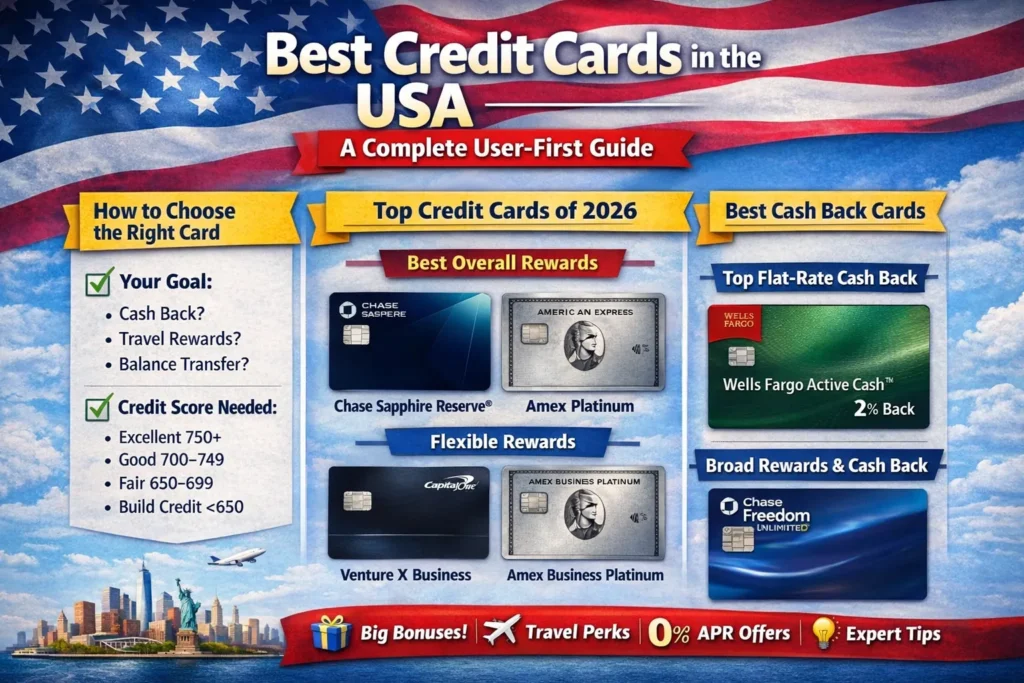
Wells Fargo Active Cash – Best simple cash back card
This card is ideal for people who want predictable rewards without complexity.
Why it feels easy
- Flat cash back on all purchases
- No categories to track
- No annual fee
Charges and interest
- Annual fee: $0
- APR range: Typically 20%–29% (variable)
- Foreign transaction fee: About 3%
Best for
- Beginners
- People who want simple cash back
Capital One Venture X – Premium travel with strong value
This card offers premium travel benefits while offsetting much of the annual fee through credits.
Why it stands out
- Travel credits that reduce real cost
- Airport lounge access
- Simple miles system
Charges and interest
- Annual fee: About $395
- APR range: Typically 22%–29% (variable)
- Foreign transaction fee: None
Best for
- Frequent travelers who want premium value
Citi Double Cash – Best for disciplined spenders
This card rewards spending and responsible repayment.
Why it is trusted
- Flat 2% cash back structure
- No annual fee
Charges and interest
- Annual fee: $0
- APR range: Typically 20%–29% (variable)
- Foreign transaction fee: About 3%
Best for
- People who consistently pay balances in full
Blue Cash Preferred – Best for families and grocery spending
This card is well suited for households with steady grocery expenses.
Why families like it
- High grocery cash back
- Useful everyday rewards
Charges and interest
- Annual fee: About $95
- APR range: Typically 21%–29% (variable)
- Foreign transaction fee: 2.7%
Discover it Cash Back – Best for beginners
This card is helpful for learning how rewards work and building credit.
Why it helps
- No annual fee
- Rotating high-reward categories
Charges and interest
- Annual fee: $0
- APR range: Typically 17%–28% (variable)
- Foreign transaction fee: None
Wells Fargo Reflect – Best for paying off debt
This card prioritizes interest savings instead of rewards.
Why it brings peace of mind
- Long 0% APR period for purchases and balance transfers
Charges and interest
- Annual fee: $0
- Intro APR: 0% for an extended period
- APR after intro: Typically 22%–29% (variable)
Final guidance to avoid mistakes
- Rewards only matter if you avoid interest
- Annual fees should be justified by real usage
- Paying in full every month is the safest strategy
- Opening too many cards at once can temporarily lower your credit score
The best credit card is not the most popular one. It is the one that fits your real life and spending habits.