
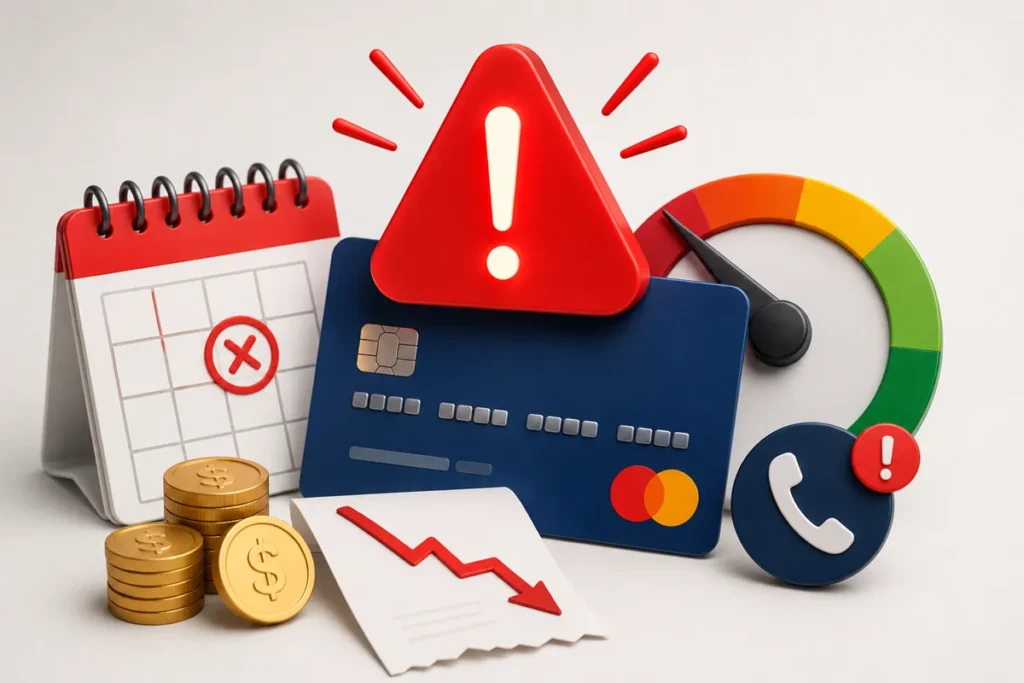
Missing your credit card payment by just 24 hours can trigger instant panic. You are likely asking yourself:
- Will my credit score drop?
- Did I already get charged a late fee?
- Can I still fix this?
- Will my bank report me to the credit bureaus?
- What if the due date fell on a weekend?
If you are searching for answers right after missing your deadline, take a deep breath. This guide covers exactly what happens in the first 24 hours, the actual risks you face, and how to fix the situation fast.
Step 1: Check If You Are Actually Late
Many people assume they have missed their payment when, technically, they haven’t. Credit card issuers have specific payment cutoff times, which often depend on time zones and processing windows.
Example: If your due date is today, but your issuer accepts payments until 11:59 PM Eastern Time, you may still have a few hours to log in and pay without penalty.
Major issuers like Chase, Capital One, American Express, and Discover all have different cutoff policies. Log into your account immediately to verify your exact deadline.
What Happens After Just One Day Late?
If you genuinely missed the cutoff by one day, the damage is usually minimal. Here is what you can expect:
1. Your Credit Score is Usually Safe
This is the biggest fear, but there is good news: credit card issuers typically do not report late payments to credit bureaus (Experian, Equifax, and TransUnion) until you are 30 days overdue. A one-day delay will not ruin your credit score.
2. A Potential Late Fee
Your issuer may charge a late fee right away. According to current regulations, these fees generally look like this:
- Up to $32 for first-time offenses.
- Up to $43 for repeat late payments within six months.
- Note: Many banks will waive this fee for loyal customers if it’s a first-time mistake.
3. Interest May Accumulate
If you carry a balance from month to month, daily interest will continue to grow until your payment is successfully processed, making your total bill slightly higher.
4. What If It Happened on a Weekend or Holiday?
If your due date falls on a Sunday or a federal holiday, some issuers automatically extend the grace period to the next business day. However, you should never assume this—always verify directly with your card issuer.
Action Plan: What You Should Do Right Now
[ Pay Immediately ] ➔ [ Call Customer Support ] ➔ [ Request a Fee Waiver ] ➔ [ Set Up AutoPay ]
1. Pay the Bill Immediately
Even if you are a day late, making the payment right now minimizes further penalties and stops any potential interest from compounding.
2. Call Customer Support
This step can save you money. Call the number on the back of your card and use this simple script:
“Hi, I accidentally missed my payment deadline by one day due to an oversight, but I have already logged in and paid the full amount. Since I always pay on time, is it possible to waive the late fee this time?”
3. Check for Failed Payments
If you thought you had set up a payment but it didn’t go through, double-check your bank account. Look for insufficient funds, a bounced transfer, or an outdated bank account link.
4. Set Up AutoPay
Prevent future mistakes by enabling automatic payments for at least the minimum amount due. This ensures you are never hit with a late fee again, even if you forget the date.
What NOT To Do
- Don’t ignore it: One day late is a minor slip-up; 30 days late becomes dangerous. Ignoring the bill will eventually lead to severe credit score damage, collection activity, and increased APRs.
- Don’t panic: As long as you handle it within 24 hours, this is nothing more than a temporary hitch.
The Final Verdict
Being one day late is entirely fixable. Your biggest priorities right now are to pay immediately, call your issuer to waive the fee, and set up safeguards so it doesn’t happen again. Act now, and this will be nothing more than a minor inconvenience.